
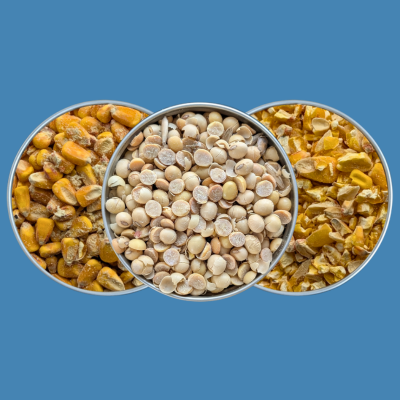
Corn and soybeans have long been the cornerstone ingredients in commercial livestock feed—and for good reason. Both are affordable, widely available, and nutritionally dense. However, a growing number of farmers and homesteaders are choosing to move away from these staples, opting instead for corn- and soy-free rations. Understanding both sides of this debate can help livestock owners make informed decisions based on the needs of their animals, land, and values.
Corn and soy are widely used in livestock diets because they provide key nutritional building blocks:
 Corn is energy-dense and high in carbohydrates, making it a cost-effective way to fuel growth and weight gain in animals like poultry, pigs, and cattle.
 Soy is one of the most efficient plant-based protein sources, offering a balanced amino acid profile that supports muscle development, milk production, and egg laying. It is one of the only plant-based proteins with a complete amino acid profile.
Beyond nutrition, these crops are mass-produced and easily sourced, which helps keep feed prices relatively low and consistent across the industry. Their use also supports predictable performance in commercial farming environments.
Despite the benefits, there are several reasons why some producers and homesteaders are shifting away from corn- and soy-based feeds:
1. Allergies and Sensitivities
Some animals, particularly poultry, may exhibit allergic reactions or digestive issues when fed diets heavy in soy or corn. Eliminating these ingredients can help improve overall health, digestion, and feather condition.
Beyond the animal, there has been some concern about the persistence of certain grain proteins or chemicals in the by-products of animals who are fed those grains. For example, the concern is that someone with a gluten sensitivity may react to meat or eggs from poultry that is fed a diet containing wheat. If we unpack that with science, there is no strong scientific evidence that people with food sensitivities to corn, gluten, or soy will react to meat from animals fed those grains. Studies show that muscle meat does not retain feed proteins in a form that would typically trigger a reaction in sensitive individuals.
However, here are a few important points to consider:
*Milk and eggs are more likely to carry trace proteins.
*Highly sensitive individuals or those with true allergies may wish to avoid products from animals fed those ingredients, just to be safe.
*Personal experience and symptom tracking are often the best guide for those with complex sensitivities.
The jury is still out whether these grains themselves are to blame for food sensitivities, or if it is the chemicals added to them in commercial agriculture that is the cause. But the avoidance of corn and soy in your animal’s feed by individuals with sensitivities can offer peace of mind in consuming their products.
2. Non-GMO and Organic Preferences
Most conventional corn and soy in the U.S. are genetically modified (GMO). For those committed to organic or regenerative farming practices, feeding non-GMO or organic alternatives is often a higher priority—even if they come at a higher cost. All Kraut Creek premium feeds, whether corn/soy free or not, are verified non-GMO.
3. Balanced Nutrition from Alternative Sources
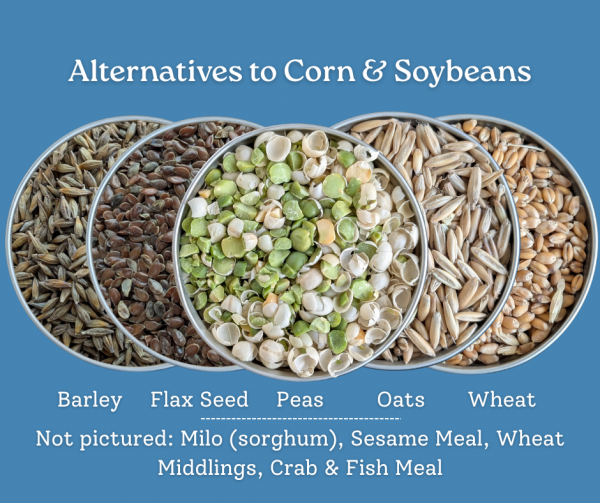
Many alternative grains and legumes—such as peas, barley, oats, flaxseed, and sunflower meal—can provide comparable nutrition without relying on corn or soy. With careful formulation, these feeds can meet the specific needs of livestock without sacrificing health or productivity.
4. Sustainability and Crop Diversity
Corn and soy are often grown in large-scale monocultures that can contribute to soil depletion and loss of biodiversity. By choosing ingredients from a wider variety of crops, farmers can support more sustainable agricultural systems.
5. Consumer Demand
Some buyers seek out products from animals raised on corn- and soy-free diets, particularly in niche markets such as pasture-raised, heritage breeds, or allergen-friendly meat and eggs. This growing demand can offer farmers a marketing edge to sell their products.
Feeding livestock a corn- and soy-free ration can offer several benefits:
- Improved digestion and animal health in sensitive individuals
- Cleaner labeling for direct-to-consumer marketing (e.g., “corn- and soy-free eggs”)
- Greater diversity in feed ingredients, supporting resilient farm systems
- Alignment with personal or consumer values, such as non-GMO or regenerative agriculture
However, it’s important to note that going corn- and soy-free usually requires more complex feed formulations and may come at a higher cost. Balancing protein and energy with alternative ingredients takes careful planning to avoid nutritional deficiencies. You’ll notice our soy-free rations include a carefully balanced mix of grains and meals to create the full amino acid profile that is not being supplied by soybeans.
Corn and soy have earned their place in livestock nutrition due to their cost-effectiveness and nutritional benefits. However, they are not the only options. As awareness grows around health sensitivities, environmental concerns, and consumer preferences, corn- and soy-free feeds are becoming more popular—and we are here to fill that need. Here are some examples of corn and soy alternatives we use here at Kraut Creek:
Conclusion
Choosing whether or not to feed corn and soy comes down to your farming goals, the needs of your animals, and the values you want your products to represent. Either way, understanding the pros and cons can help you feed your animals with confidence and purpose, not based around hype or scary headlines.
Check out our current corn and/or soy-free options for poultry and swine.
Interested in a custom formulation for your own specific needs? Reach out to us!
FAQ: Why are there Pellets in the Corn/Soy Free Feeds?
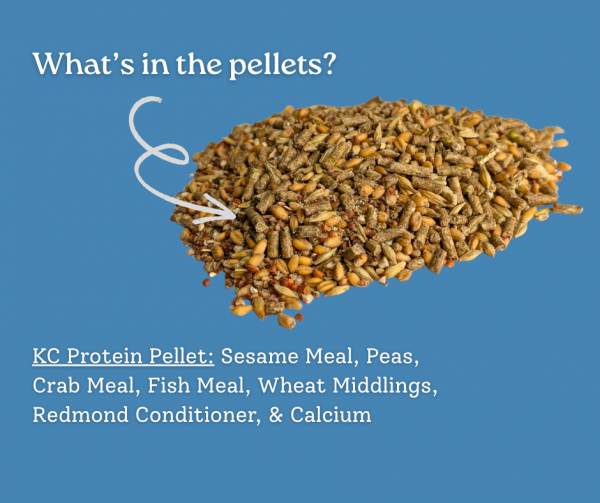
This is a question we get a lot! You may have noticed there are pellets in the corn/soy free formulations of chicken feed. These are most noticeable in the layer feed, as it is not ground up like in the starter and grower versions. These pellets are what we call “protein pellets” and are a pelletized form of all the protein sources we use in place of soybeans. This provides the protein base around which we build the rest of the formulation.
Why are they pelletized? It serves two purposes: One, to reduce the amount of fines in the feed, because a significant portion of the alternative protein sources are fine materials. Two, it ensures a consistent level of protein and complete amino acid profile across the batch of feed, so your birds are getting an adequately balanced diet throughout the bag. If your birds tend to leave pellets behind, we recommend withholding the addition of more feed until they have cleaned these up, because they are a crucial part of the feed ration.
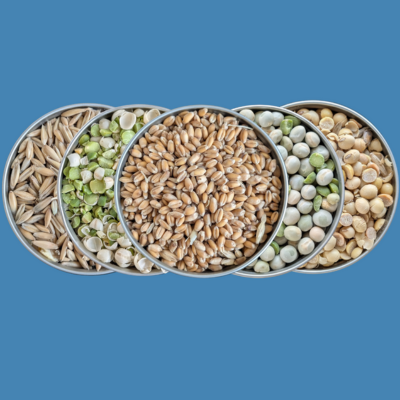
 Soybeans – Packed with high-quality protein and essential amino acids, soybeans promote muscle development and milk production. Non-GMO soybeans also reduce the risk of pesticide exposure, benefiting both animals and consumers.
 Wheat – Wheat offers highly digestible energy and supports steady growth. It’s a versatile grain that also contributes to improved feed efficiency when sourced from non-GMO, high-quality harvests.
 Sesame Meal – Rich in protein and calcium, sesame meal supports bone health and overall development. It’s a valuable addition to balanced feed rations, and an important component in corn and soy-free feeds, especially when sourced from trusted suppliers.
 Supports immune function and overall animal health
 Encourages strong root development and drought resilience
 Enhances flowering, fruiting, and overall plant vigor
 Improves organic matter content in depleted soils