1468 Sater Street
Greenville, Ohio 45331
Hours of Operation:
Monday - Friday
8am - 4:30pm

When you’re shopping for livestock feed, it’s easy to grab the “better deal” based on price per bag, but that doesn’t always mean you’re getting the best value.
To truly compare feeds, you have to make sure you’re comparing apples to apples. And that’s where things can get tricky, because reading labels can be overwhelming.
Here are a few ways feeds can look cheaper than they really are:
🔹 Lower protein levels
A 16% feed will almost always cost less than an 18% feed, but your animals will need to eat more of it to meet their nutritional needs.
🔹 Fewer pounds per bag
Not all bags are created equal. A 40 lb. bag next to a 50 lb. bag might look similar on the shelf – but that’s a 20% difference right out of the gate.
🔹 Filler ingredients
Some feeds rely heavily on lower-cost fillers that dilute nutritional value to fill out a bag. It may look like a deal, but you’re often paying for less usable nutrition, or worse, harmful ingredients.
🔹 Higher feeding rates
If a feed requires you to feed more per animal per day, your “cheap” bag may actually cost you more over time.
🔹 Requires supplementation
Cheaper feeds are often missing key ingredients, requiring you to supplement or top dress with another product to meet all your animal’s needs, such as calcium for layers or prebiotics for livestock. A quality feed covers all your animal’s basic needs and then some in one bag.
So how do you compare feeds the right way?
Use feed conversion calculators when needed (especially for minerals listed in ppm) to understand what your animals are actually getting, as most feed companies list their ingredients in percentages, ppm, or IU/lb. We like this one: https://madbarn.com/conversion-calculator/
And one more thing to keep in mind:
Form matters!
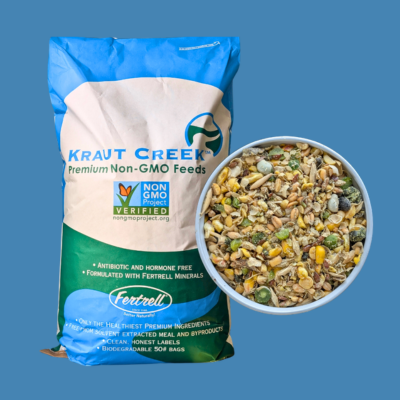
Pelleted feeds can be convenient, but they can also make it harder to see what’s really inside. Whole or textured feeds offer more transparency, allowing you to better evaluate ingredient quality at a glance, and avoid unnecessary binders.
Everyone is pinching pennies right now, we get it. But the goal isn’t to buy the cheapest feed – it’s to find the one that delivers the most value, best performance, and strongest nutrition for your animals, and you!
Look beyond the bag, that’s where the real difference shows up.