1468 Sater Street
Greenville, Ohio 45331
Hours of Operation:
Monday - Friday
8am - 4:30pm

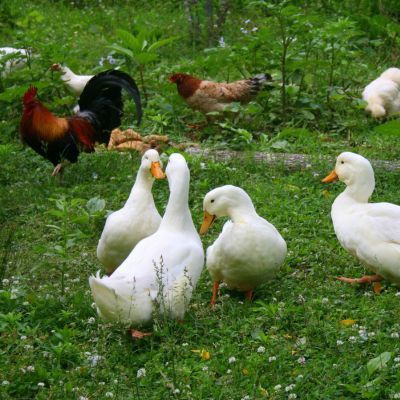
🐥 Feed the Animal in Front of You
One of the most common questions we hear is: “Can I just feed one feed to all of my animals?”
Maybe it’s chicks and laying hens.
Growing meat birds and breeding birds.
A mixed sheep and goat herd.
Young goats and mature bucks.
We understand the appeal. One feed is simpler, takes up less storage space, and often seems like it would save money.
But here’s the question we like to ask in return…
Would you feed a toddler, a pregnant mother, a high school athlete, and your grandparents the exact same diet every day? Probably not.
They all eat food, but their nutritional needs are very different. The same is true for livestock. Every life stage has a different job to do.
Animals don’t have different nutrient requirements because feed companies want to sell more products. They have different requirements because their bodies are doing different jobs.
A chick is building bones, muscles, feathers, organs, and an immune system. A laying hen is producing an egg nearly every day, requiring tremendous amounts of calcium, protein, energy, vitamins, and trace minerals. A broiler is growing rapidly and converting feed into muscle. A mature pet rooster? His nutritional needs are dramatically lower than any of those birds.
The same principle applies across nearly every livestock species.
Growing animals need nutrients to build new tissue. Pregnant animals need a different level of nutrients to grow healthy offspring. Lactating animals have some of the highest nutritional demands they’ll ever experience. Mature maintenance animals simply need enough nutrition to maintain body condition and stay healthy.
Feeding everyone the same diet usually means someone is compromising. When one feed has to meet the needs of every animal, one group is usually getting exactly what they need, while another group is getting too much, and another group isn’t getting enough.
That can lead to:
The goal isn’t simply to feed animals, it’s to feed them well.
Tailored nutrition doesn’t have to be complicated.
The good news?
You don’t always need six different feeds.
Sometimes small management changes make a big difference.
If you have the ability, feed different life stages separately, even if it’s only during part of the day.
Use creep feeders so young animals can access higher-protein feed while adults cannot. Provide layer feed only to birds that are actively laying.
Feed breeding stock according to your assessment of their body condition (more on that to come!) rather than filling feeders the same every day.
Sometimes separating animals for just 20–30 minutes during feeding is enough to allow everyone to eat the diet designed for them.
But what if one feed is your only option?
We know that’s reality for many homesteads.
Maybe you only have room for one feeder.
Maybe your flock free-ranges together.
Maybe efficiency & convenience is most important right now.
If you truly need to feed one feed, here are a few guidelines.
Feed for the animals with the highest nutritional demand.
Generally speaking, it’s safer to provide extra nutrition to maintenance animals than it is to ask growing or producing animals to perform on an inadequate diet.
For example:
🐥 If you have chicks and adult birds together temporarily, feeding a quality grower ration is a better choice than feeding a layer ration. You can then provide free-choice oyster shell or aragonite to laying hens so they can consume additional calcium as needed. If the growing chicks were fed only a layer feed, they would consume too much calcium, which actually reduces egg production once they reach maturity.
The goal is to supplement the individuals who need something different, rather than assuming every animal has identical requirements.
Don’t forget the foundation: forage
No matter what species you’re feeding, remember that forage often supplies the majority of an animal’s nutrition.
Good-quality pasture or hay can reduce the need for additional supplementation and make it easier to meet the needs of multiple classes of livestock. When you know the quality of your forage, you can make smarter decisions about which animals truly need extra nutrition and which don’t.
Feed the animal as an individual.
It’s tempting to think of a flock or herd as one group.
Healthy livestock management begins with recognizing that every animal has different nutritional needs depending on its age, stage of production, and purpose.
The best feeding programs aren’t built around what’s easiest for the feed bin. They’re built around what’s best for the animal standing in front of you. Good nutrition doesn’t have to be complicated, it just has to meet the needs of the individual.