
1468 Sater Street
Greenville, Ohio 45331
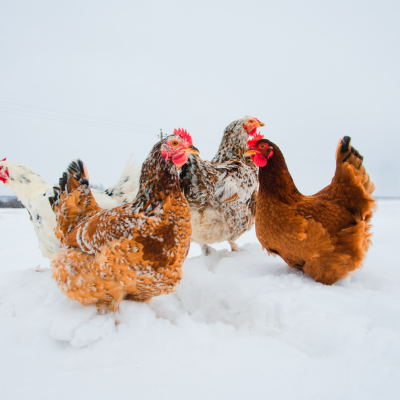
Winter Tips & Reminders for Laying Hens
As we move into fully into winter, it’s completely normal for egg production to slow down — and for many flocks, this time of year is a natural pause in the hen’s laying cycle. Just like us, this time of year is a period of rest and reset.
🌞 Light Drives Egg Production
Remember – all animals set their biological clocks off the sun – not the temperature. Daylight hours are what signal animals to prepare for the change in season, from a slowdown in laying, to growing a winter coat, to spiking ACTH to store more calories as fat for the upcoming winter. Sunlight drives all of these functions.
Hens need about 14–16 hours of light per day to maintain consistent laying. When light enters the eye, it triggers the pituitary gland to release hormones that start the egg-laying process. Shorter days signal their bodies to slow or stop egg production. This happens every year as daylight decreases and is part of a healthy, natural rhythm. Here in Ohio, we are currently getting about 9.5 hours of daylight. By comparison, Florida is already back to getting 14 hours of sunlight!
🍂 Where We Are in the Laying Cycle Right Now
This season is often when hens are:
- Finishing a molt
- Taking a natural reproductive break
- Conserving energy to reset for spring laying
This pause helps extend a hen’s productive life and usually leads to stronger laying when days lengthen again.
❄️ Cold Weather = Higher Energy Needs
When temperatures drop, hens use more calories just to maintain body heat. Energy that might have gone toward egg production is now prioritized for:
- Staying warm
- Feather regrowth
- Overall health
This is another reason egg counts dip — even with excellent nutrition.
You can support these extra calorie needs by giving your chickens a high-energy treat in the evenings such as a handful of scratch grains, a dallop of coconut oil, or some fresh raw milk. The digestion of high fat foods generates heat for your birds. Just don’t overdo it – a little goes a long way!
💡 Can Supplemental Light Help? Yes!
Adding light can help maintain or boost egg production. Follow these tips:
Add light in the early morning, not the evening. Set your timer so lights come on before dawn rather than staying on late into the night. This helps hens naturally go to roost as it gets dark and prevents stress or disorientation.
Use a soft, warm light source. A single low-wattage LED or incandescent bulb (around 40 watts or 200–400 lumens) is usually enough for a small coop. You don’t need bright light — just enough to mimic dawn.
Provide 14–16 total hours of light per day. For example, if you get 10 hours of daylight, set your timer for 4–6 hours of morning light. Gradually increase it over a week to avoid shocking your hens’ system.
Keep it consistent. Chickens thrive on routine. Use a timer so the light comes on and off at the same time every day.
Prioritize safety. Use a bulb guard or protective cage, keep wires out of reach, and make sure all electrical components are rated for barn or outdoor use to avoid fire hazards.
Roosters need the same amount of daylight to maintain full fertility that hens need to lay eggs. So if you are planning on hatching eggs this spring, make sure your chickens are getting enough light.
⚖️ Should You Use Supplemental Light?
There’s no right or wrong answer. Using artificial light helps keep egg production more consistent, which is ideal for those who sell eggs or rely on steady output.
On the other hand, letting your hens rest naturally through the winter gives their bodies a break, often leading to stronger, more productive laying in spring. Remember – A hen is born with all the eggs she will ever have. Know that keeping egg production consistent year-round with supplemental lighting means that your hens will not lay as long. But for some farmers, this is worth the trade-off.
💚 The Takeaway
A slowdown in egg production this time of year is normal, expected, and not a sign of poor feed quality. Whether you choose to let your hens rest or support production with supplemental light, understanding their natural cycle helps you make the best choice for your flock.
Happy, healthy hens lay better eggs — in every season 🐓✨